Scent and Spirit: Why All Life Requires Smells
In the hierarchy of the five senses, we often prioritize what we can see or touch. We build monuments for the eyes and cook feasts for the palate. But the Torah introduces a different sensory priority—one that doesn’t nourish the stomach, but the soul. If we want to understand how to truly “date” the Divine, we have to understand why all life requires smells.
The Only Sense the Soul “Eats”
The Sages of the Gemara ask a striking question: “From what does the soul derive benefit, but the body does not?” They conclude: “It is scent” (Berakhot 43b).
This is a biological and spiritual mystery. When you eat, your body is fueled. When you see beauty, your mind is inspired. But when you smell a high-quality oil or the fragrance of the Ketoret (incense), something deeper happens. The Hebrew word for scent, Reiach (ריח), shares the same root as the word for spirit, Ruach (רוח). Scent is the “food” of the spirit.
Making God “Happy”: The Reiach Nichoach
Throughout the Torah, the highest form of service is described as a Reiach Nichoach—a “pleasing aroma” to God.
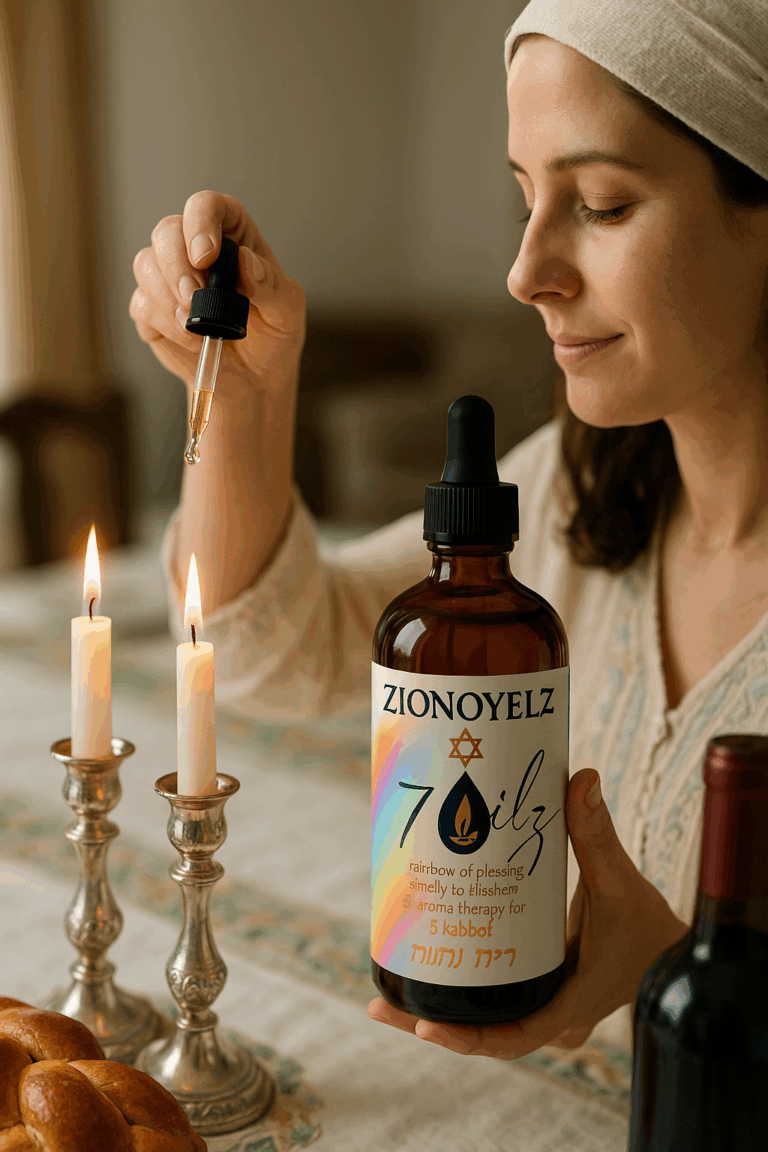
Does the Infinite Creator need to smell? Of course not. But when we use scent in our rituals—like adding oils to our Shabbat candles—we are offering the most refined part of the physical world back to its Source. We are saying, “I am not just fulfilling a duty; I am creating an atmosphere.”
If Shabbat is a date with God, then the scent is the “perfume” of the soul. A date without aroma is functional; a date with aroma is an experience. By introducing oils into your home, you are acknowledging that the “Guest of Honor” is sensitive to the environment you’ve prepared.
The “tohome” Practice

To live a “tohome” life is to realize that your home is a sanctuary, and every sanctuary needs its incense. When you add a drop of oil to a flame, you aren’t just making a room smell good—you are feeding your Neshamah and inviting the Divine Presence to linger.
We use smells because life requires them to be multidimensional. Without scent, our spiritual life is a black-and-white photograph. With it, it becomes a living, breathing encounter.


The Uncorrupted Sense
The Zohar takes this even deeper, looking back to the Garden of Eden. When humanity fell, almost every sense was part of the transgression:
- Sight: “The woman saw that the tree was good for food…”
- Touch: “…she took of its fruit.”
- Taste: “…and she ate.”
- Hearing: “They heard the voice of God walking in the garden…”
But the sense of smell is never mentioned in the story of the Fall. Because of this, the Kabbalists teach that smell is the only sense that remains “pure”—it was not corrupted by the ego. This is why scent bypasses our logical, defensive brains and goes straight to the Neshamah (the soul). It is the “back door” to the spiritual world.