Swords Into Plowshares: the Verse Before the Famous One
Across First Avenue from the United Nations headquarters in New York there is a granite wall with a verse cut into it. It was built in 1948, while the UN building was going up, and for twenty-seven years the words stood there without an author’s name. In 1975 somebody added one word underneath: Isaiah.
The inscription is Yeshayahu 2:4. It is probably the most quoted sentence about peace in the world, and almost nobody who quotes it reads the line above it.
The verse everyone quotes
וְכִתְּתוּ חַרְבוֹתָם לְאִתִּים וַחֲנִיתוֹתֵיהֶם לְמַזְמֵרוֹת
They shall beat their swords into plowshares and their spears into pruning hooks. Yeshayahu 2:4
Read it closely and notice what does not happen. Nothing is thrown away. The swords are not buried, melted down into slag, or dumped in the sea. They are beaten, וְכִתְּתוּ, and what comes out the other side is an אֵת, a plowshare, and a מַזְמֵרָה, a pruning hook. The same iron, in the same quantity, doing the opposite job. The prophet is not describing disarmament. He is describing a change of purpose.
The second tool is worth a moment. A pruning hook takes its name from the root זמר, to prune, the same verb the Torah uses for the vineyard in the six working years and forbids in the seventh. A spear becomes the blade you use to cut a vine back so it fruits better. War metal ends up in the hands of a man improving a harvest.
The verse nobody quotes
Verse 4 does not open the thought. It finishes one. Here is the sentence immediately above it, and it is the one that says where any of this comes from.
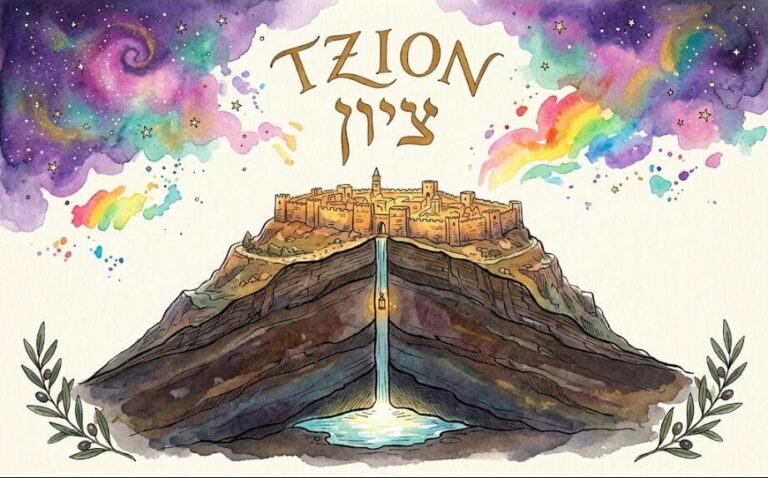
כִּי מִצִּיּוֹן תֵּצֵא תוֹרָה וּדְבַר יְהוָה מִירוּשָׁלִָם
For from Zion shall go forth Torah, and the word of Hashem from Jerusalem. Yeshayahu 2:3
The order is the prophet’s own and he states it without hedging. Instruction goes out of a particular place. Then the nations come to be taught. Then the metal gets repurposed. The peace on the wall in New York is the third item on a list, and the first item is a book coming out of a city.
Michah says the same thing in the same words in his fourth chapter, writing in a different century. Two prophets, one sentence, preserved twice. The tradition does not usually keep a duplicate unless it wants the point heard.
The sword and the carob
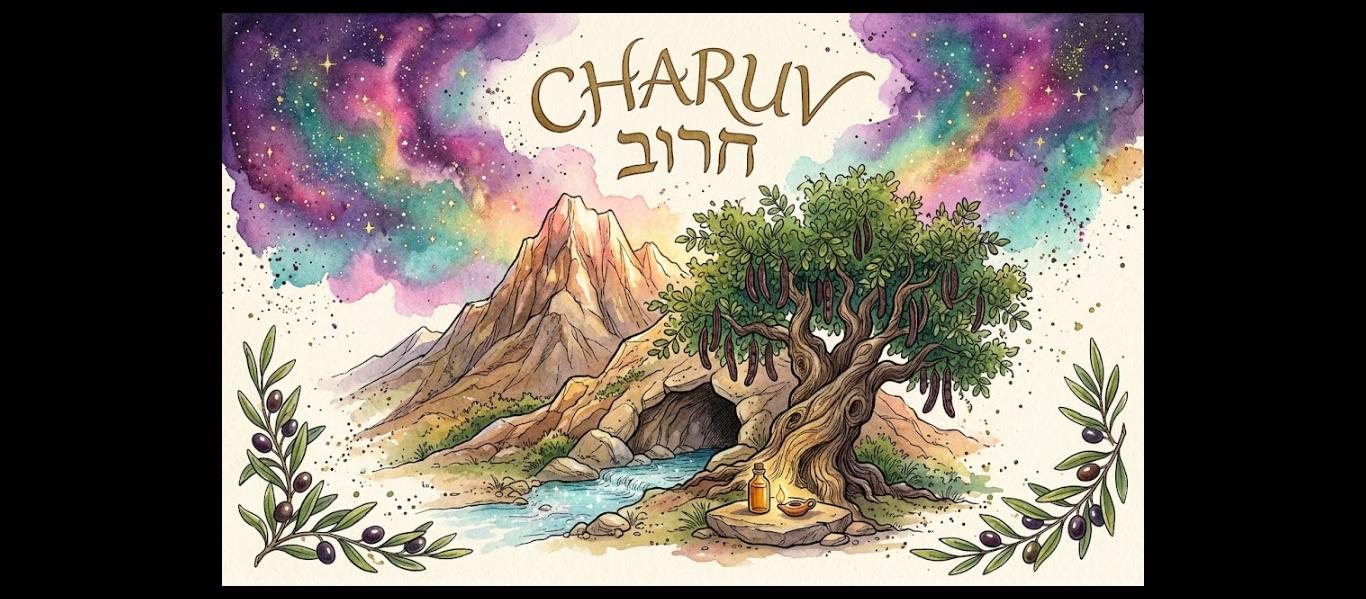
The Hebrew for a sword is חֶרֶב, cherev. Three consonants, chet resh bet, and they carry a surprising amount. חָרֵב is dried out or laid waste. חֻרְבָּן, churban, is the destruction of the Temple. And חָרוּב, charuv, is the carob.
One honest caution before anybody builds a tower on that. The carob is almost certainly a loan word that travelled into Hebrew from the same source as the Arabic kharrub, so the shared letters are a coincidence of spelling rather than a shared root. We mark that plainly. What the letters do once they are Hebrew is a separate question, and Jewish reading has always treated the second question as its own.
Here is what makes it hard to leave alone. Sinai has a second name in the Torah, חוֹרֵב, Horev. Spell the carob in full and it is written with the same four letters. The mountain where the instruction was given and the tree Rabbi Shimon bar Yochai lived on for twelve years in a cave share a spelling with the weapon.
Beating a sword into a plowshare and pressing a carob into oil for a lamp are the same operation performed on different material. Nothing is discarded. The thing that cut is given a new job, and the new job feeds somebody or lights something. That is what we mean on this site when we say the work is turning swords into light.
Why it matters if you are not religious
A person can care about Israel deeply, argue for it, serve in its army, and never once be told that the prophets assigned the place an output. The verse on the wall in New York is quoted at Israel more often than it is quoted by Israel, usually as a reproach. Read the line above it and the reproach turns into a job description.
You do not have to accept any of this to notice the grammar. Yeshayahu put a book before the peace and a city before the book. If the sentence is going to be quoted at the gates of the United Nations, the first half of it deserves to be read out too.
Kol Tehom, Volume One follows this chain the whole way down, from the verb for splitting the sea to the oil on a Shabbat table. It is free to read here. The carob oil we press in Petah Tikva is here, from the tree that shares its letters with the mountain.

New teachings by email, and a bottle to pick up from us in Petah Tikva. The light of Sinai for your table.