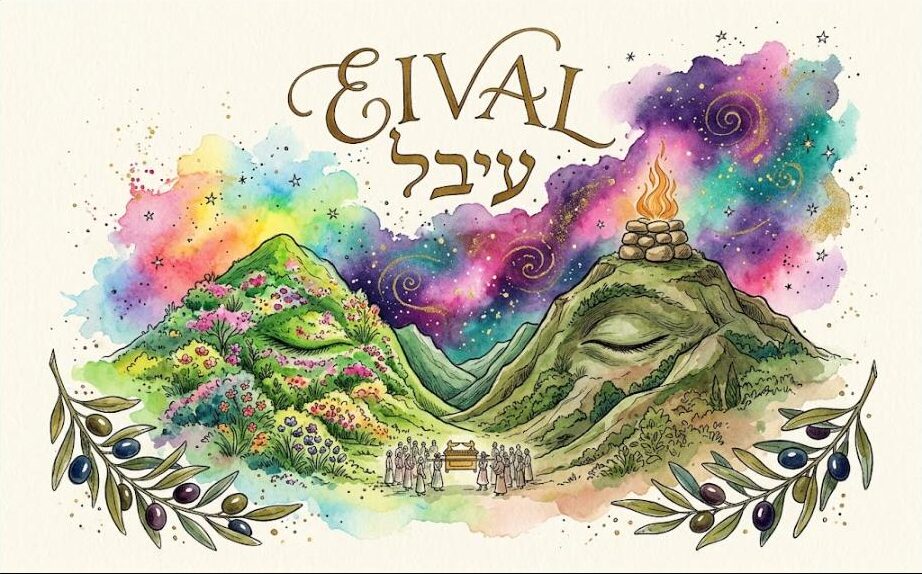
The Altar on the Mountain of the Curse
The blessing and the curse are each given a mountain, and at first it looks like a verdict about altitude.
וְנָתַתָּה אֶת הַבְּרָכָה עַל הַר גְּרִזִים וְאֶת הַקְּלָלָה עַל הַר עֵיבָל
You shall put the blessing on Mount Gerizim and the curse on Mount Eival. Devarim 11:29
Three verses earlier the same pair has no definite article: בְּרָכָה וּקְלָלָה, a blessing and a curse. The article arrives only when each is fixed to a mountain. Before they were placed, they were not yet the blessing and the curse.
What gets built on the cursed mountain
Read what the Torah actually builds where, and the arrangement turns over.
תָּקִימוּ אֶת הָאֲבָנִים הָאֵלֶּה… בְּהַר עֵיבָל… וּבָנִיתָ שָּׁם מִזְבֵּחַ לַה׳ אֱלֹהֶיךָ… וְזָבַחְתָּ שְׁלָמִים וְאָכַלְתָּ שָּׁם וְשָׂמַחְתָּ לִפְנֵי ה׳ אֱלֹהֶיךָ
Set up these stones on Mount Eival… build there an altar to Hashem your God… offer peace offerings, eat there, and rejoice before Hashem your God. Devarim 27:4–7
The stones with the Torah written on them go on Eival. The altar goes on Eival. The joy goes on Eival. Gerizim receives speech pointed toward it and nothing else. The Samaritan text moves the altar across the valley, and that edit is the clearest evidence of what the verse says.
The eyeball mountain
Say עֵיבָל out loud in English and you hear it: eyeball. The Hebrew carries it too. Read the name as עֵין and בַּל, an eye and a no, on the pattern of bal tashchit and bal yera’eh. The curse sits on the mountain of the eye.
וְלֹא תָתוּרוּ אַחֲרֵי לְבַבְכֶם וְאַחֲרֵי עֵינֵיכֶם אֲשֶׁר אַתֶּם זֹנִים אַחֲרֵיהֶם
Do not stray after your heart and after your eyes, which you go astray after. Bamidbar 15:39
The eye leads you astray, and the Torah still builds its altar on the eye’s mountain. The fall is part of the design.
כִּי שֶׁבַע יִפּוֹל צַדִּיק וָקָם
For the righteous man falls seven times and rises. Mishlei 24:16
Seven falls times ten is seventy, and seventy is the numerical value of ע, the letter that is also the word for an eye and opens the name עֵיבָל.
Feed the animal first
The same chapter that places the mountains gives the order of the meal.
וְנָתַתִּי עֵשֶׂב בְּשָׂדְךָ לִבְהֶמְתֶּךָ וְאָכַלְתָּ וְשָׂבָעְתָּ
I will give grass in your field for your animal, and you will eat and be satisfied. Devarim 11:15
אָסוּר לְאָדָם שֶׁיֹּאכַל קוֹדֶם שֶׁיִּתֵּן מַאֲכָל לִבְהֶמְתּוֹ
A person may not eat before he gives food to his animal. Rav, Berachot 40a
עֲשֵׂה רְצוֹנוֹ כִּרְצוֹנְךָ, כְּדֵי שֶׁיַּעֲשֶׂה רְצוֹנְךָ כִּרְצוֹנוֹ
Make His will as your will, so that He will make your will as His will. Rabban Gamliel, Avot 2:4
The animal eats first, by law. Every person walks with blinders, like a horse, following the will he was given, and most souls spend a life feeding the animal before anything else. That is God’s design and is no failure of it.
Why a thousand lifetimes
The book adds the gilgulim. A soul does not live one life. It returns, and each life is a dive into the tehom, one desire explored all the way down. The lives are nested: if a life does not reach the end of its string, the soul goes again, until the circle is completed and that desire has been explored all the way around. The lives are more than immunization shots against the next mistake. Each one maps another stretch of the deep. The reading is the author’s own and is marked as his.
On the mountains, and in the valley
The sages record two pictures of that afternoon, and the book holds both.
שִׁשָּׁה שְׁבָטִים עָלוּ לְרֹאשׁ הַר גְּרִזִּים וְשִׁשָּׁה שְׁבָטִים עָלוּ לְרֹאשׁ הַר עֵיבָל, וְהַכֹּהֲנִים וְהַלְוִיִּם וְהָאָרוֹן עוֹמְדִים לְמַטָּה בָּאֶמְצַע
Six tribes went up to the top of Mount Gerizim and six tribes went up to the top of Mount Eival, and the Kohanim, the Levi’im and the Ark stood below in the middle. Mishnah Sotah 7:5
אֵלּוּ וָאֵלּוּ לְמַטָּה הֵן עוֹמְדִים, הָפְכוּ פְּנֵיהֶם כְּלַפֵּי הַר גְּרִיזִים וּפָתְחוּ בִּבְרָכָה, כְּלַפֵּי הַר עֵיבָל וּפָתְחוּ בִּקְלָלָה
These and these were all standing below. They turned their faces toward Mount Gerizim and opened with the blessing, toward Mount Eival and opened with the curse. Rebbi, Sotah 37a
In the Mishnah’s picture the people climb, half to each height. In Rebbi’s, nobody stands on either mountain, and the whole nation stands on the floor between them, turning one way and then the other. Rashi on Devarim 11:29 adds that every curse was first said as a blessing, baruch ha’ish, before the faces turned.
Both are the words of the living God
The Gemara already has a rule for two true accounts that cannot both be the halacha.
אֵלּוּ וָאֵלּוּ דִּבְרֵי אֱלֹהִים חַיִּים הֵן
These and these are the words of the living God. Eruvin 13b
The book reads it at full strength. The Gemara counts nine hundred and seventy-four generations that were to be created before the world and were folded away (Chagigah 13b). Each one was a beginning in which the answer could come out another way. If the possibilities are infinite, both pictures of Eival happened, each in its own world, and both are correct.
The choice does not stay open forever. As a person grows in spirit, the one meant for his universe becomes clear to him, and he chooses it. That universe is the one he builds together with God. The reading is the author’s own and is marked as his.
One voice, two directions
חַיָּב אָדָם לְבָרֵךְ עַל הָרָעָה כְּשֵׁם שֶׁהוּא מְבָרֵךְ עַל הַטּוֹבָה
A person is obligated to bless on the bad exactly as he blesses on the good. Mishnah Berachot 9:5
The halacha keeps two different blessings in one mouth: hatov v’hameitiv for the good, dayan ha’emet for the bad (Berachot 54a). Equal obligation, opposite words, and nobody in fifteen centuries has collapsed the pair.
One limit belongs with it. Nachum Ish Gamzu said gam zu l’tovah over his own losses (Ta’anit 21a), and Rabbi Akiva said kol d’avid Rachmana l’tav avid over his own lamp (Berachot 60b). Neither said it standing over another man’s grave. Said about your own descents, it opens a gate. Said about someone else’s, it is a stranger explaining a funeral.
The altar is built where the curse was spoken. The joy is eaten there. A person standing in the valley turns to both mountains before the day is out.
From the third book of Kol Tehom, N-Door: Standing Water.

New teachings by email, and a bottle to pick up from us in Petah Tikva. The light of Sinai for your table.