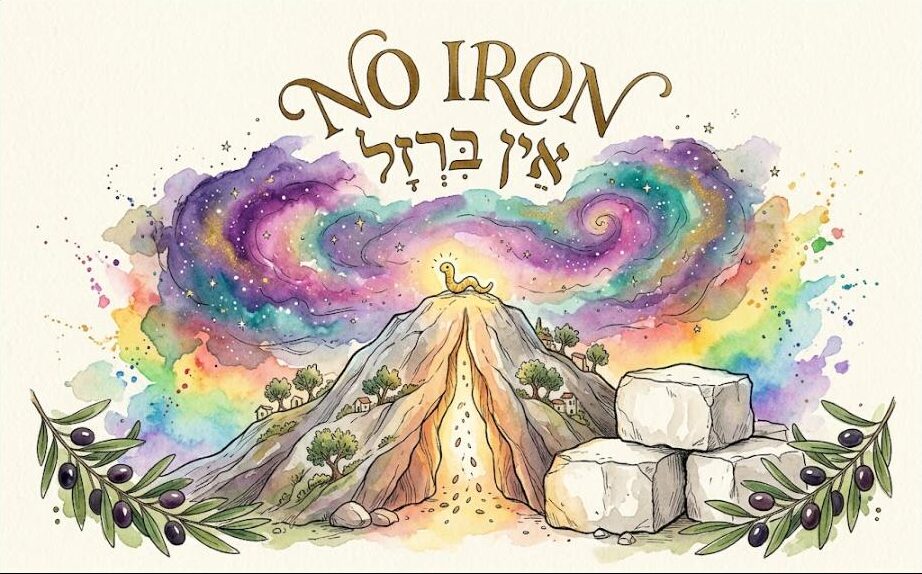
No Iron in the House: the Shamir
The building that mattered most was forbidden the tool. Shlomo had to raise the Temple out of stone, and the Torah had already ruled out the one instrument every builder reaches for.
לֹא־תָנִיף עֲלֵיהֶם בַּרְזֶל
You shall not lift iron upon them. Devarim 27:5
וּמַקָּבוֹת וְהַגַּרְזֶן כׇּל־כְּלִי בַרְזֶל לֹא־נִשְׁמַע בַּבַּיִת בְּהִבָּנֹתוֹ
Hammer, axe, any tool of iron: none was heard in the House while it was being built. Melachim I 6:7
The tool that shortens and the house that lengthens
The Mishnah gives the reason in one line, and it is a line about what materials are for.
שהברזל נברא לקצר ימיו של אדם, והמזבח נברא להאריך ימיו של אדם, אינו בדין שיונף המקצר על המאריך
Iron was created to shorten the days of a person, and the altar was created to lengthen them. It is not right that what shortens be lifted over what lengthens. Mishnah Middot 3:4
Materials carry their function into whatever they touch. A chisel forged for the sword would be in the walls before the first worshipper arrived.
A worm that splits mountains
Shlomo asked the Sages how to build without iron. Their answer was the shamir, the creature Moshe used to engrave the stones of the ephod.
איכא שמירא דאייתי משה לאבני אפוד
There is the shamir, which Moshe brought for the stones of the ephod. Gittin 68a
The Gemara gives its measure: the size of a barleycorn, created in the six days of creation, and nothing hard can stand before it (Sotah 48b). The smallest thing in the story is the one that opens stone. The search for it ran through Ashmedai, king of the demons, who told Shlomo where it was kept: with the prince of the sea, who entrusts it only to a wild bird bound to him by oath.
ממטי ליה לטורי דלית בהו ישוב, ומנח לה אשינא דטורא, ופקע טורא; ומנקיט מייתי ביזרני מאילני, ושדי התם, והוי ישוב
It carries the shamir to mountains where no one lives, sets it on the crag, and the mountain splits. Then it brings seeds from the trees and drops them there, and the place becomes inhabited. Gittin 68b
Every mountain the shamir opened became a place people could live. The tool for building the house of life had been making places for life all along, one split crag and one handful of seeds at a time.
What may be struck
The House kept one fire burning by law, and the Torah forbids letting it go out.
אֵשׁ תָּמִיד תּוּקַד עַל־הַמִּזְבֵּחַ לֹא תִכְבֶּה
A perpetual fire shall burn on the altar; it shall not go out. Vayikra 6:6
One material in that building is commanded to be beaten.
שֶׁמֶן זַיִת זָךְ כָּתִית לַמָּאוֹר
Pure olive oil, crushed, for the light. Shemot 27:20
What is crushed is what will become light. What is meant to stand is never struck at all. That is the rule of the House, and it is the rule of every lamp you fill: the olive gives itself to the flame, and the stones around it are left whole.
From the second book of Kol Tehom, NoiZ: Already Infinite.
Hands were never the problem
A reading goes around that the ban on iron is really a ban on people, since a human being is full of the same noise the House refuses. The verses say something narrower and sharper. Shlomo levied thirty thousand men, seventy thousand carriers and eighty thousand quarrymen in the hills (Melachim I 5:27-29). Hiram the craftsman was a man from the tribe of Naftali with a Tyrian father, and his trade was bronze (Melachim I 7:13-14), a metal the Torah never bars from the work.
Human hands built it. The stones arrived finished from the quarry so that nothing would be heard in the house. What is disqualified is the sound, and the sound is the one thing about us that cannot be dressed in advance.
The shamir makes the same point from the other side. It could not be kept in metal at all, since it cut through anything harder than wool:
כְּרָכוּהוּ בִּסְפוֹגִין שֶׁל צֶמֶר וְהִנִּיחוּהוּ בְּאִיטְטָא שֶׁל אֲבָר מְלֵאָה סוּבֵּי שְׂעוֹרִין
They wrapped it in tufts of wool and set it in a lead tube full of barley bran. Sotah 48b
The hardest cutting instrument in the world was carried in the softest metal in the shop, packed in chaff. Nothing in the House is permitted to announce itself.
Scent is the only sense that works under that condition. A molecule crosses into the nose with no sound at all and goes straight to memory, which is why the ketoret is the service the Gemara says was smelled in Jericho. Oil is the material that builds in silence, and the olive is commanded to be crushed for exactly that purpose.
The House that is already built
Rashi takes the logic to its end. Asked how the Temple could be built at night or on Yom Tov, when building is forbidden on both, he answers that the question only applies to one kind of building:
הָנֵי מִילֵּי בִּנְיָן הַבָּנוּי בִּידֵי אָדָם, אֲבָל מִקְדָּשׁ הֶעָתִיד שֶׁאָנוּ מְצַפִּין בָּנוּי וּמְשׁוּכְלָל הוּא יִגָּלֶה וְיָבֹא מִשָּׁמַיִם
That applies to a building built by human hands. The future Sanctuary we await is already built and perfected, and it will be revealed and come from heaven. Rashi, Sukkah 41a
His proof verse is מִקְדַּשׁ ה׳ כּוֹנְנוּ יָדֶיךָ, the Sanctuary of Hashem established by Your hands, sung at the sea four verses after the water splits (Shemot 15:17). The Rambam holds the opposite, that the third House is built by us in the ordinary way (Hilchot Melachim 11:1), and the argument has never closed.
The two sides stop colliding once the builder is placed outside time. The Mikdash is on the short list of things created before the world, read out of Yirmiyahu 17:12, מָרוֹם מֵרִאשׁוֹן מְקוֹם מִקְדָּשֵׁנוּ, exalted from the beginning is the place of our Sanctuary (Pesachim 54a, Nedarim 39b). A thing made before there were days has no fixed direction of arrival. We build it and it comes down finished, which are two reports of one event read from opposite ends, the way a seed and a fruit are two reports of one tree.
Where is the soul of the carob? is the same question asked of a tree instead of a house.

New teachings by email, and a bottle to pick up from us in Petah Tikva. The light of Sinai for your table.