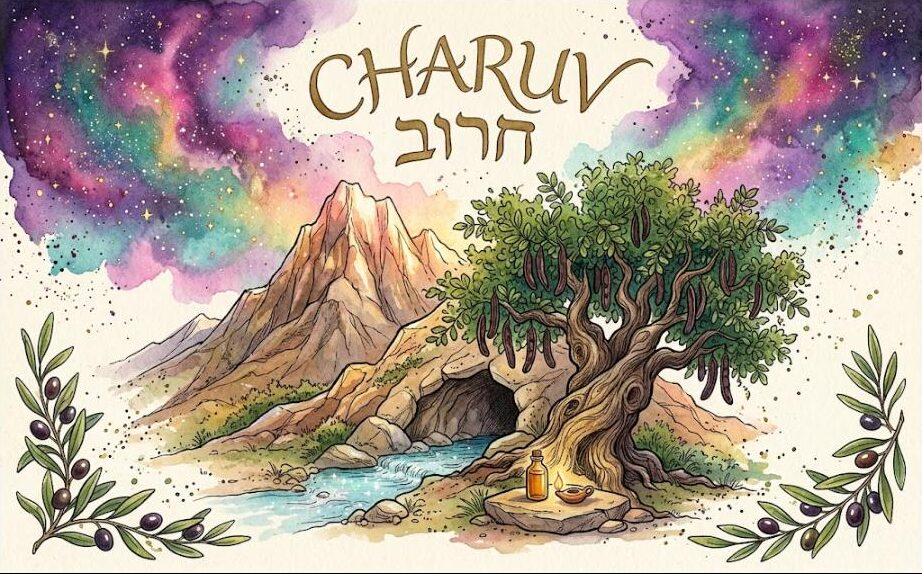
Chorev: the Mountain Whose Name Is Running
Every mountain in the Torah is reached by somebody. The one where the voice comes is reached twice, four centuries apart, by two men in the same condition, and the name of the mountain reports the condition.
חֹרֵב, Chorev. Those three letters read from the far end give בָּרַח, barach, he ran.
Both of them arrived running
Moshe comes to it as a fugitive. He had struck down an Egyptian, looked both ways first, hidden the body in the sand, and learned by morning that two Hebrews had watched the whole thing. The Torah gives the verb before it gives any place at all.
וַיִּבְרַח מֹשֶׁה מִפְּנֵי פַרְעֹה
And Moshe ran from before Pharaoh. Shemot 2:15
He is eighty in the next scene and still out there, still keeping another man’s sheep, and one day the flock takes him behind the wilderness to a mountain he seems never to have climbed in forty years of grazing beside it.
וַיָּבֹא אֶל הַר הָאֱלֹהִים חֹרֵבָה
And he came to the mountain of God, to Chorev. Shemot 3:1
Eliyahu arrives at the same mountain in the same condition. Izevel had sworn to have him dead within the day. He went a day into the wilderness, sat under a broom bush and asked to die. What got him up again was food, twice, and after it forty days of walking in one direction, away. At the end of that walk he is in a cave on Chorev, and what is handed to him there is a silence so thin that only one sense in the body was built to catch it (Melachim I 19:2-12).
Two men, four hundred years apart, on the same road. Both were running when they got there, and the name of the place they ran to is their running, spelled from the other end.
The fruit inside the threat
Spell Chorev full, with the vav, and it is חוֹרֵב. The carob is חָרוּב. Four letters, reordered.
The whole passage sits in Vayikra Rabbah 35:6, and it opens on a tree. Whoever is written for life in Yerushalayim, Rabbi Acha ben Eliyashiv says, is the one who toils in Torah, because Torah is a tree of life: עֵץ חַיִּים הִיא, she is a tree of life (Mishlei 3:18).
Rabbi Shimon bar Yochai, the man who would later live twelve years on a carob, gives the frame.
הַכִּכָּר וְהַמַּקֵּל נִתְּנוּ מְכֹרָכִין מִן הַשָּׁמַיִם
The loaf and the rod were given from Heaven bound together. If you keep the Torah, here is a loaf to eat. If not, here is a rod.
His proof is Yeshayahu: if you are willing and listen, you will eat the good of the land, וְאִם תְּמָאֲנוּ וּמְרִיתֶם חֶרֶב תְּאֻכְּלוּ, and if you refuse and rebel you will be devoured by the sword (Yeshayahu 1:19–20). The Midrash reads the same letters a second way: חֲרוּבִין תֹּאכֵלוּ, you will eat carobs. חֶרֶב and חָרוּב, sword and carob, are one root. The opposite of eating the good of the land is hunger, and carob was the food of animals and of the poor.
Rabbi Acha adds the line that turns the threat into a mechanism.
צְרִיכִין יִשְׂרָאֵל לְחָרוּבָא עָבְדִין תְּשׁוּבָה
When Israel needs the carob, they return. Vayikra Rabbah 35:6
Rabbi Akiva closes it: poverty suits the daughter of Yaakov like a red strap on the head of a white horse. The carob is the rod and the loaf at once. It arrives as lack, and the lack is what turns a person around.
The Kol Tehom reading: the passage begins with a tree of life and ends with a carob tree, and a living tree is the picture. Almost all the wood in a great tree is dead cells. The heartwood at the center is dead and holds the tree upright, and even the vessels that lift water to the leaves are dead cells. Only a thin ring under the bark is alive. A person grows the same way: the years that felt like the rod, the carob years, become the wood that holds the life up.
A sword devours and leaves nothing. A carob is what people eat when there is nothing else, and it is the fruit the tradition keeps putting in the mouths of those who sit and learn with no other supply. The threat and the provision are one spelling, and the difference between them is which way you read it.
Twelve years on carob
Rabbi Shimon bar Yochai ran from Rome into a cave with his son, and the Gemara feeds them there.
אִיתְרְחִישׁ נִיסָּא אִיבְּרִי לְהוּ חָרוּבָא וְעֵינָא דְמַיָּא
A miracle happened: a carob tree and a spring of water were created for them. Shabbat 33b
Twelve years on that tree. The man who came to call them out of the cave was the last man the Torah had left in a cave on Chorev: אֲתָא אֵלִיָּהוּ וְקָם אַפִּיתְחָא דִמְעָרְתָּא, Eliyahu came and stood at the mouth of the cave. They came out for good on the eve of Shabbat, to an old man running at twilight with myrtle in both hands, one bundle for זָכוֹר, remember, one for שָׁמוֹר, keep.
A mountain named for running, a fruit that arrives when nothing else will, a prophet who waits at cave mouths, and an old man running with branches to meet Shabbat. The whole sequence is held together by four letters in two orders.
Why it belongs beside a learning lamp
Carob is chosen because it is the fruit of the mountain the runners came to, and because the Midrash makes needing it the thing that turns a person around.
Carob oil, Israeli carob in olive oil, for the lamp you light when you sit down to learn. The argument is worked out in full in Kol Tehom, free in English and Hebrew.
Keep reading
- Reiach the one sense that came through Eden unbroken, and the four things it has already done
- Shemen oil, a name and eight, inside three letters
- Oil, from the Deep to the Flame the oil the Menorah asked for, and why the first drop
The map shows how all of it connects.

New teachings by email, and a bottle to pick up from us in Petah Tikva. The light of Sinai for your table.